
Project Overview:
Executive Narratives Designed for High-Stakes Moments
Presentation Design | Communication at Scale | Brand Systems | High-Stakes Delivery
Executive Narratives Designed for High-Stakes Moments
Presentation Design | Communication at Scale | Brand Systems | High-Stakes Delivery
The problem
At Adobe, presentation design is not support work. It is a critical layer of leadership communication.
At Adobe, presentation design is not support work. It is a critical layer of leadership communication.
When internal presentation capacity reached its limits, high-priority launches and executive moments risked slowing down. The challenge was not finding help. It was finding a partner who could operate at Adobe’s bar — delivering speed, precision, and brand integrity under unforgiving timelines.
Time + Team
Timeline: Variable, deadline-driven delivery across launches and events
Sole Presentation Designer & Creative Lead (me) • Internal stakeholders • External stakeholders • Executive partners
Timeline: Variable, deadline-driven delivery across launches and events
Sole Presentation Designer & Creative Lead (me) • Internal stakeholders • External stakeholders • Executive partners
My role
I served as the sole presentation designer, owning executive and high-visibility work end-to-end.
I led creative strategy, art direction, and execution while partnering directly with internal teams to translate complex ideas into clear leadership narratives.
I served as the sole presentation designer, owning executive and high-visibility work end-to-end.
I led creative strategy, art direction, and execution while partnering directly with internal teams to translate complex ideas into clear leadership narratives.
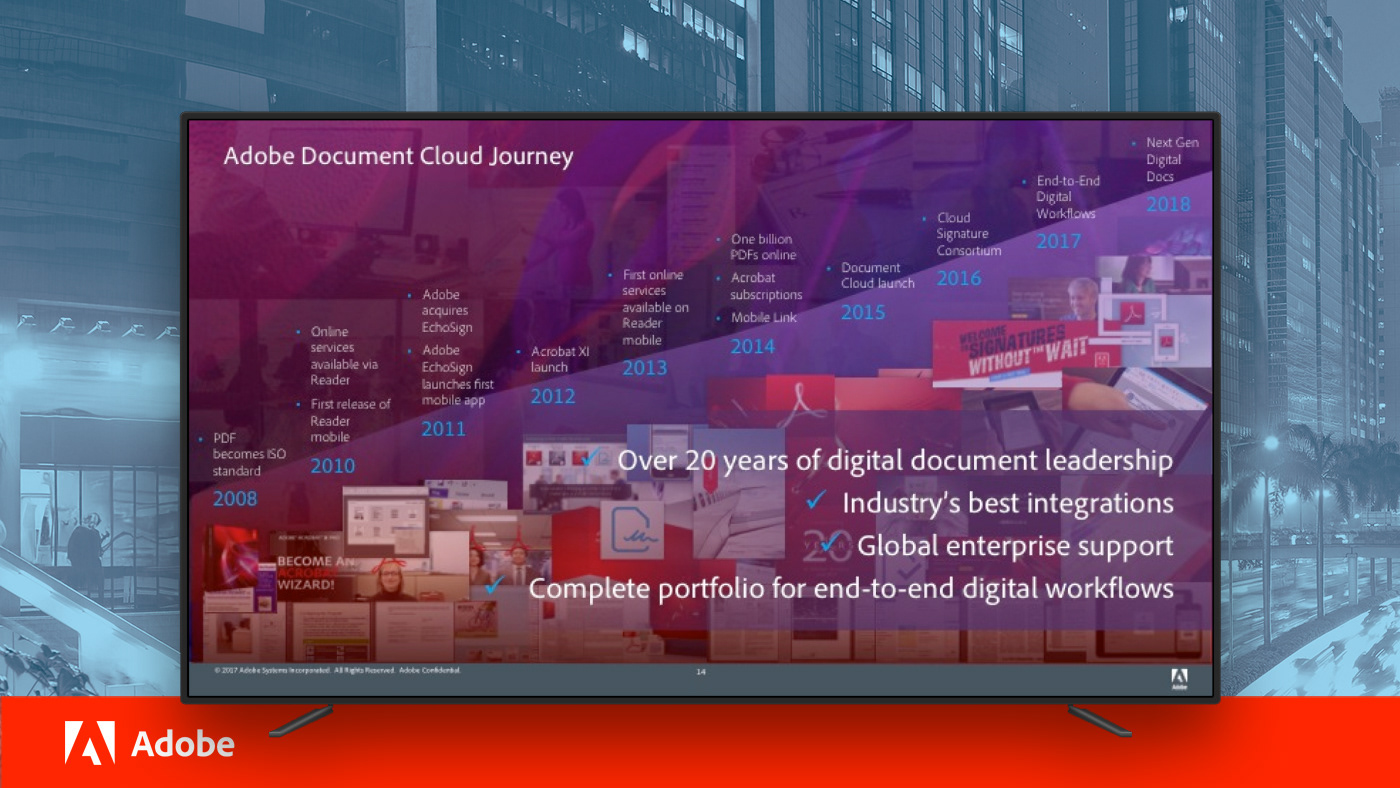
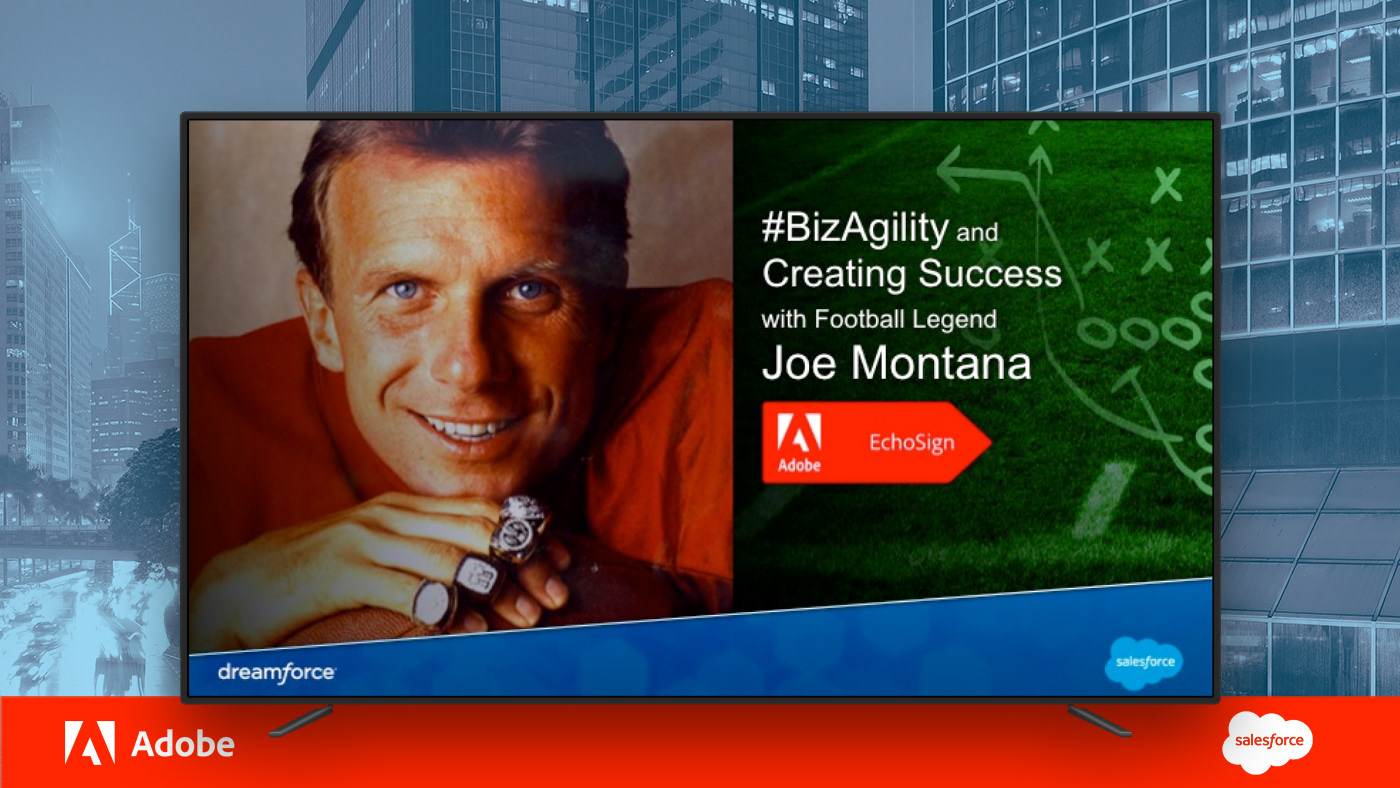
▼ Read the full story to see how it all came together. ▼

Intro / Background:
Designing Stories Within a Design-Centric Culture
Designing Stories Within a Design-Centric Culture
Some projects are assignments. This one was a return.
Adobe is where my design career began. It’s where I learned what a truly design-led culture looks like in practice.
Craft mattered. Systems mattered. Storytelling wasn’t decoration. It was strategy.
Craft mattered. Systems mattered. Storytelling wasn’t decoration. It was strategy.
Those early years shaped how I think, collaborate, and hold the bar for quality.
Years later, after building and running my own design agency, I reconnected with Adobe in a very different role.
I returned not as an employee, but as a trusted creative partner. The familiarity was immediate. I already understood the brand, the people, and the expectations. That context allowed me to move fast and deliver work that felt unmistakably Adobe from day one.
I returned not as an employee, but as a trusted creative partner. The familiarity was immediate. I already understood the brand, the people, and the expectations. That context allowed me to move fast and deliver work that felt unmistakably Adobe from day one.
Over time, I became a go-to partner for internal teams that needed high-impact design under tight timelines. A core focus was executive presentation design supporting keynotes, product launches, and high-visibility events where clarity, credibility, and narrative precision mattered most.

The Problem:
Scale and Speed Under an Unforgiving Bar
Scale and Speed Under an Unforgiving Bar
Adobe operates at a level where presentation design is not a support function. It’s a critical layer of leadership communication. Product launches, analyst briefings, and executive keynotes move fast and carry real stakes.
But even in a design-led organization, capacity has limits.
But even in a design-led organization, capacity has limits.
When Adobe’s internal presentation team reached saturation, high-priority work risked slowing down. These were not optional decks. They were moments that required precision, narrative clarity, and absolute brand integrity — often under compressed timelines.
The challenge wasn’t finding help. It was finding help that could perform at Adobe’s level.
Key constraints to solve:
▶ Demand outpaced capacity
Urgent and high-volume presentation requests exceeded what the internal team could absorb.
Urgent and high-volume presentation requests exceeded what the internal team could absorb.
▶ Zero tolerance for quality drift
Every deliverable had to meet strict brand standards and executive expectations.
Every deliverable had to meet strict brand standards and executive expectations.
▶ Tight timelines, no margin for error
Projects arrived late, moved fast, and left no room for iteration missteps.
Projects arrived late, moved fast, and left no room for iteration missteps.
The problem was clear. A world-class presentation team needed to scale without compromising craft, consistency, or confidence while timelines kept shrinking.
That constraint set the bar for everything that followed.

My Role + Scope
Served as the sole presentation designer, owning work end-to-end.
My responsibilities included:
▶ Led creative strategy and art direction for executive and high-visibility presentations
▶ Ensured brand alignment, narrative clarity, and design quality from concept through delivery
▶ Maintained quality control under tight timelines and high stakeholder expectations
▶ Partnered directly with internal teams to translate complex ideas into clear leadership stories
▶ Ensured brand alignment, narrative clarity, and design quality from concept through delivery
▶ Maintained quality control under tight timelines and high stakeholder expectations
▶ Partnered directly with internal teams to translate complex ideas into clear leadership stories
Tools used:
▶ PowerPoint • Photoshop • Illustrator
▶ PowerPoint • Photoshop • Illustrator
Expanded scope beyond presentations:
▶ Designed interactive PDFs, interactive demos, and microsites
▶ Produced print-ready event collateral, signage, and swag
▶ Created illustration work and conference brand systems
▶ Designed interactive PDFs, interactive demos, and microsites
▶ Produced print-ready event collateral, signage, and swag
▶ Created illustration work and conference brand systems
The Solution:
Holding the Bar when the Pace Accelerates
Holding the Bar when the Pace Accelerates
Adobe didn’t need prettier slides. It needed presentations that could carry strategy in real rooms, with real stakes.
I treated executive decks as a narrative system for leadership communication. Not decoration. Within Adobe’s brand standards, I designed presentations that established hierarchy, controlled pacing, and made complex ideas legible under pressure. Every visual decision served the speaker and the story, not the slide itself.
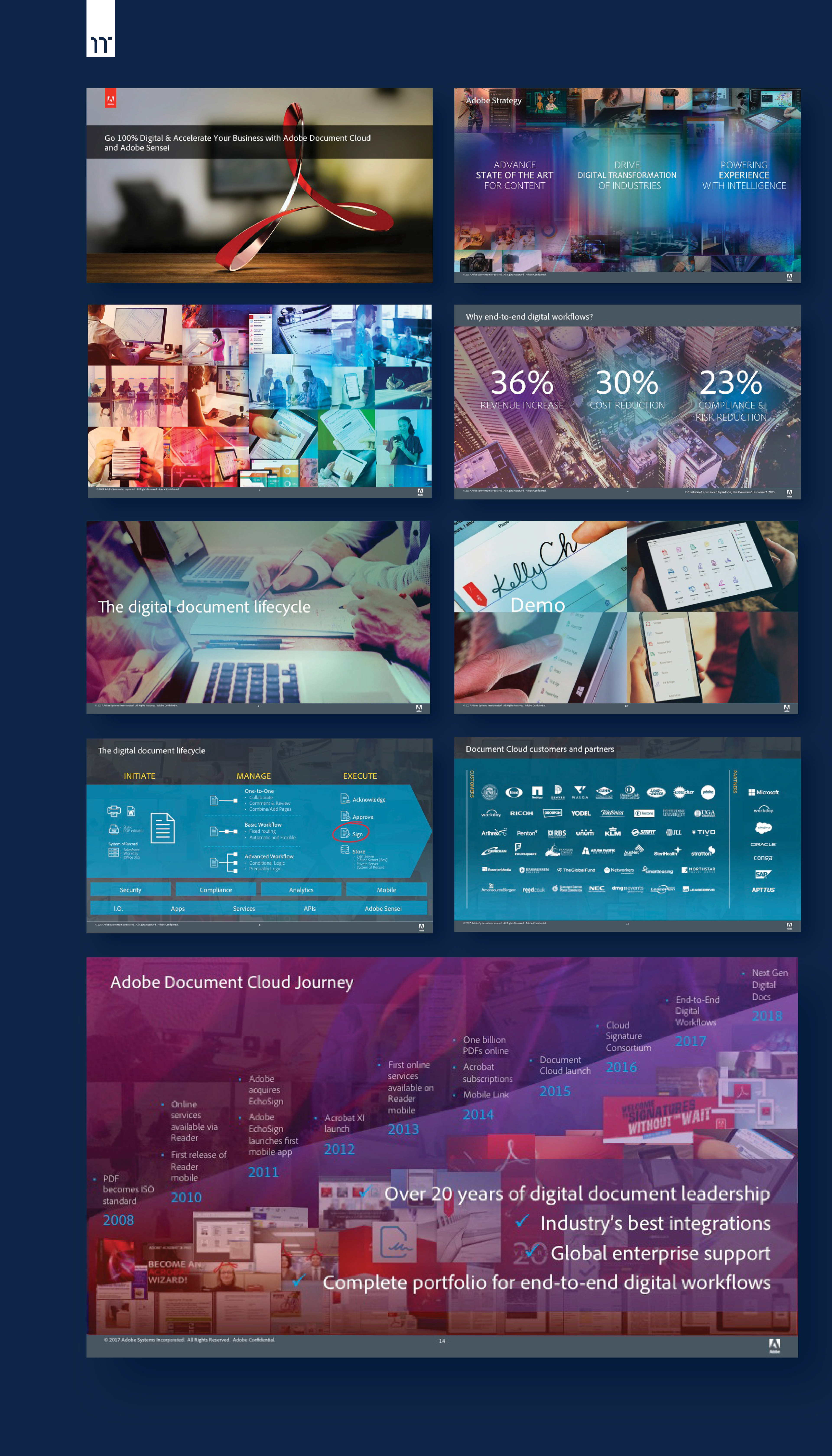
In one executive deck, I was given the latitude to push Adobe’s visual language further than previous work.
I introduced texture, lighting, and abstraction to increase engagement and authority while remaining unmistakably Adobe. The goal was not novelty. It was clarity and presence.
The result was a deck that held attention without relying on clip art or dense bullet lists and supported leadership delivery rather than competing with it.
Balancing brands on a shared stage
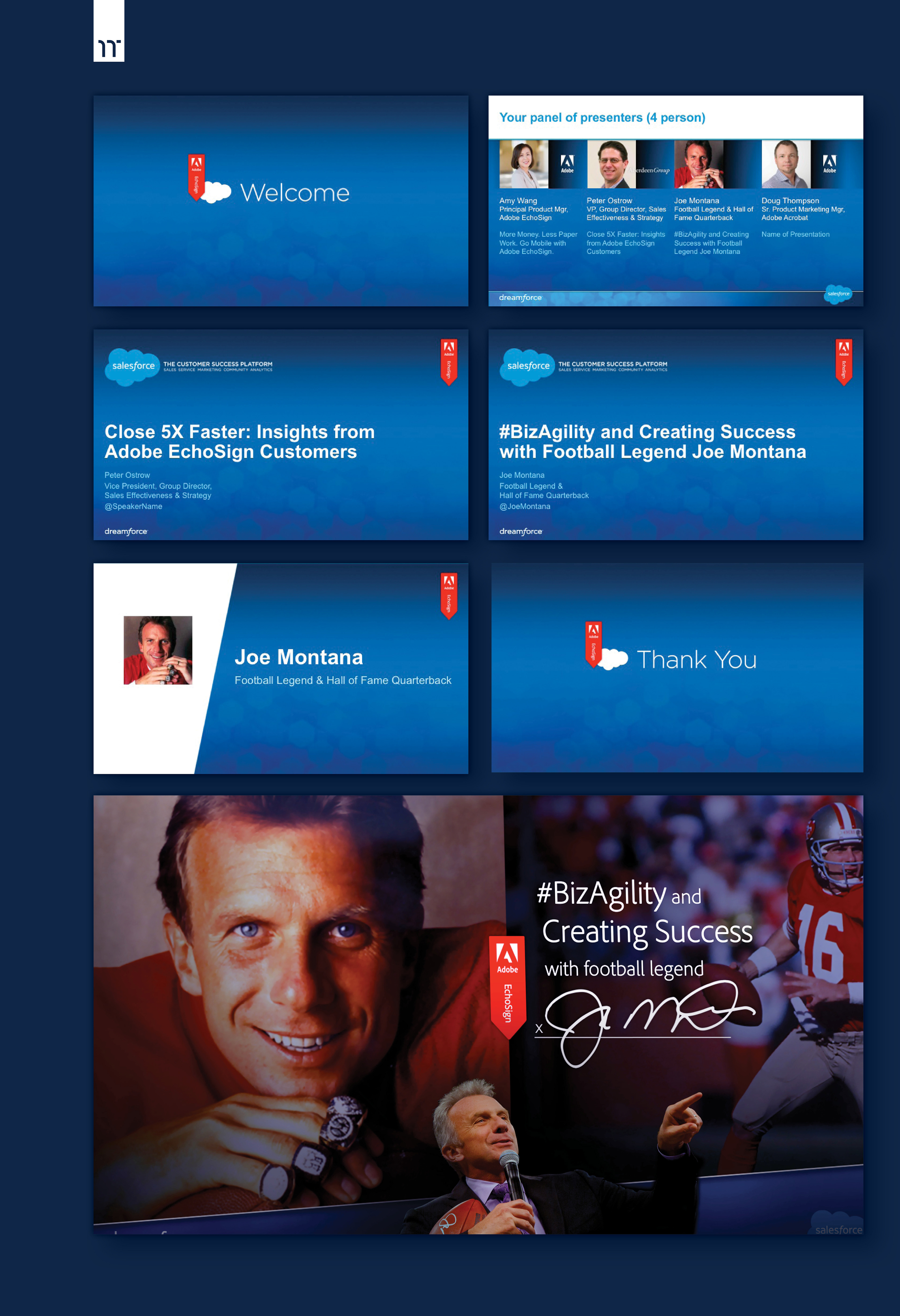
A second project (below) introduced a different constraint. For a partner-facing keynote at Salesforce Dreamforce, Adobe shared the stage with another dominant brand. Visibility was not the challenge. Balance was.
A second project (below) introduced a different constraint. For a partner-facing keynote at Salesforce Dreamforce, Adobe shared the stage with another dominant brand. Visibility was not the challenge. Balance was.
I designed a visual system that respected both identities, aligned hierarchy and tone, and allowed the narrative to feel cohesive rather than competitive. The system held up across keynote delivery, large-format screens, and live audience conditions. This proved it could scale under real-world constraints.
Across both projects, the approach remained consistent. Design served the message. Systems enabled scale. And every deck was built to perform when clarity and credibility actually mattered.
When the story meets the moment
This deck is also a personal favorite. As a Bay Area guy, I had the chance to design for an event featuring one of my all-time sports heroes — NFL legend Joe Montana. That year, he took the stage at Dreamforce with my slides behind him, speaking to an audience of thousands. Seeing my work frame his words in such a high-profile moment was both surreal and unforgettable.
This deck is also a personal favorite. As a Bay Area guy, I had the chance to design for an event featuring one of my all-time sports heroes — NFL legend Joe Montana. That year, he took the stage at Dreamforce with my slides behind him, speaking to an audience of thousands. Seeing my work frame his words in such a high-profile moment was both surreal and unforgettable.

Challenges + Learnings:
Trust, Speed, and Sustained Delivery
Trust, Speed, and Sustained Delivery
Working with Adobe — first as an in-house designer and later as an external partner — required operating with immediate trust. Familiarity with the culture and teams reduced ramp time, but it also raised expectations. The work needed to land quickly, accurately, and with minimal oversight.
The primary constraint was speed. Adobe’s timelines often ran tight, especially around launches and major events. Design decisions had to be made fast and hold up under executive scrutiny.
Over time, I refined my workflow, tightened communication loops, and developed a repeatable approach for delivering high-quality work under pressure. This environment also reinforced the compounding value of reliability and consistency.
The key learning was clear: At scale, design impact is built on trust. When teams know the work will be strong and on time, design becomes a strategic partner, and not a bottleneck.

Impact + Results:
Design that Earned Repeat Trust
Design that Earned Repeat Trust
The work delivered immediate execution value while strengthening long-term partnerships at Adobe.
Results
▶ Delivered executive- and launch-ready presentations under consistently tight deadlines without compromising quality
▶ Enabled internal teams to hit critical launch and event milestones with confidence
▶ Built and sustained long-term design partnerships across multiple Adobe business units over many years
▶ Reinforced Adobe’s brand standards across high-visibility internal and external communications
▶ Delivered executive- and launch-ready presentations under consistently tight deadlines without compromising quality
▶ Enabled internal teams to hit critical launch and event milestones with confidence
▶ Built and sustained long-term design partnerships across multiple Adobe business units over many years
▶ Reinforced Adobe’s brand standards across high-visibility internal and external communications
Consistent delivery led to broader engagement across the organization, supporting teams spanning:
▶ Document Cloud • Acrobat • Echosign • Creative Cloud • Stock • Adobe TV • Product Marketing • Privacy • Evangelism
▶ Document Cloud • Acrobat • Echosign • Creative Cloud • Stock • Adobe TV • Product Marketing • Privacy • Evangelism
And flagship events such as:
▶ Adobe Summit • Adobe MAX • Worldwide Sales Conferences
▶ Adobe Summit • Adobe MAX • Worldwide Sales Conferences
The impact was not limited to individual decks. Consistent delivery under pressure positioned design as a trusted, repeat partner. And one that teams could rely on when timelines were unforgiving and expectations were high.

Postface:
Trust, Continuity, and Craft
Trust, Continuity, and Craft
This body of work represents more than a series of projects. It reflects a long arc of trust and shared standards.
Much of this partnership centered on Acrobat, one of Adobe’s most visible and enduring products. While my role was one part of a much larger system, the contribution was consistent: Helping leadership communicate with clarity, confidence, and discipline.
The takeaway is simple: Strong design partnerships compound over time. When trust, craft, and delivery stay aligned, design becomes a long-term asset — not a transactional service.
Interested? Let’s connect.